
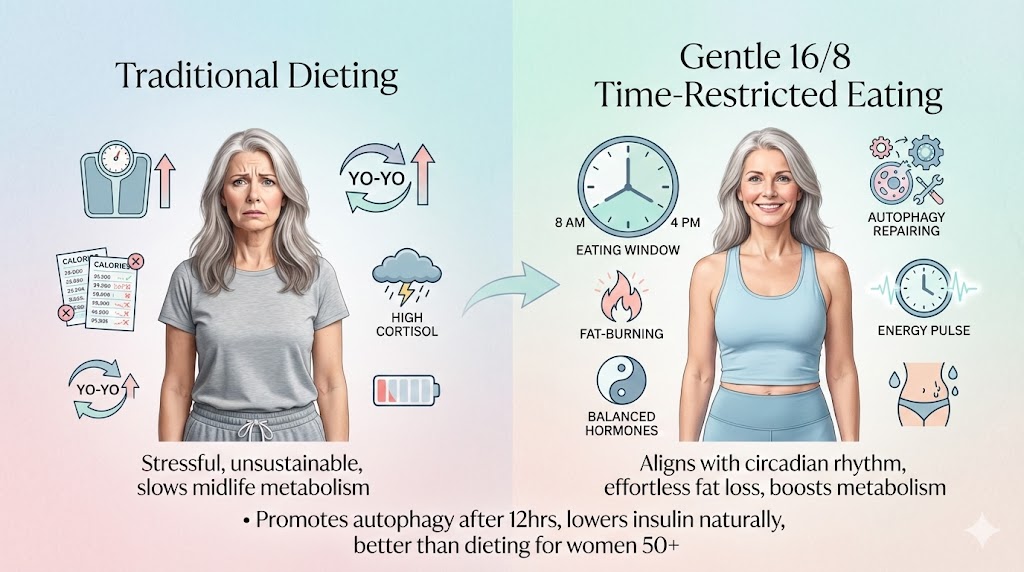
Why Gentle Time-Restricted Eating Works Better Than Dieting for Midlife Metabolism
If belly fat feels more stubborn after 50—despite eating “right” and staying active—you’re not imagining it. Hormonal shifts, insulin resistance, and slower metabolic flexibility all conspire to make midlife fat loss feel frustrating.
The problem isn’t willpower.
It’s timing.
16/8 intermittent fasting, also called time-restricted eating, works with your changing physiology instead of against it. When done correctly, it helps the body access stored fat, stabilize blood sugar, and reduce the hormonal signals that drive midlife belly fat—without extreme restriction.
Key Takeaways
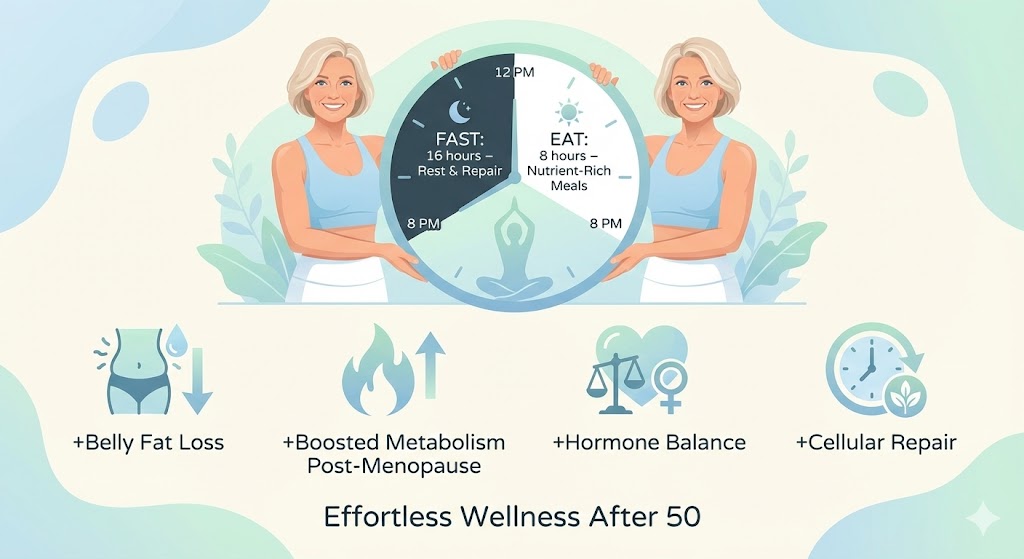
- After 50, fat loss is driven more by hormonal timing than calorie cutting, and 16/8 fasting helps lower insulin and cortisol—the two biggest drivers of belly fat.
- Time-restricted eating restores metabolic flexibility, allowing the body to burn stored fat more efficiently without extreme dieting.
- Earlier eating windows work best in midlife, supporting circadian rhythm alignment and reducing late-night fat storage.
- When done gently and consistently, 16/8 fasting delivers visible results in weeks, with improved energy, appetite control, and reduced abdominal fat.
What Is 16/8 Fasting (and Why It’s Ideal After 50)?
16/8 fasting means:
- 16 hours fasting
- 8-hour eating window
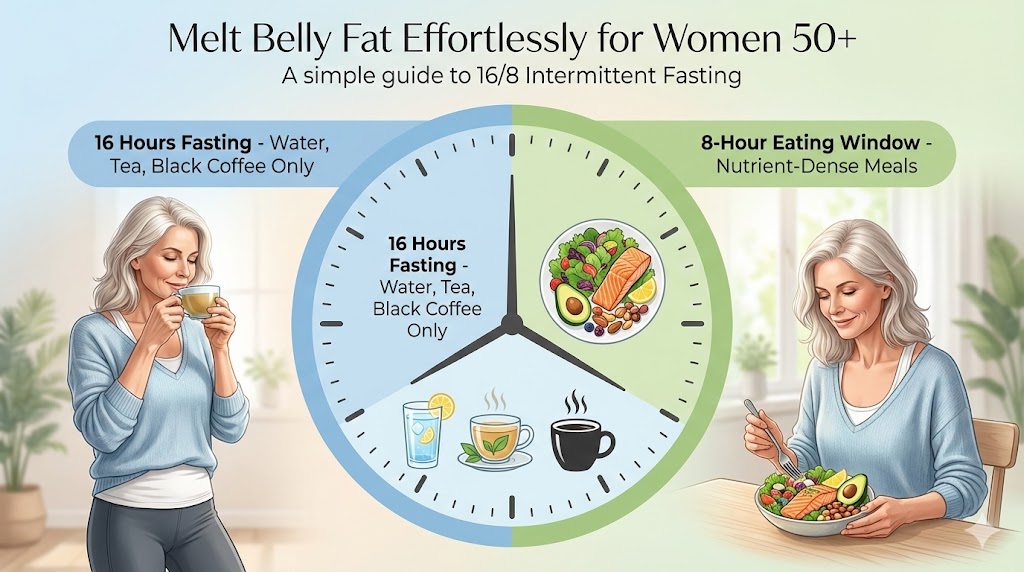
Example:
- Eat between 10 a.m. and 6 p.m.
- Fast overnight until the next morning
After 50, this gentle structure works because it:
- Reduces constant insulin signaling
- Improves fat-burning access
- Supports circadian rhythm alignment
- Preserves muscle when paired with adequate protein
This is not about skipping meals—it’s about giving your metabolism a daily reset.
Why Belly Fat Becomes Harder to Lose After 50
Midlife belly fat is driven less by calories and more by hormonal signaling:
- Insulin resistance increases with age
- Cortisol stays elevated longer
- Estrogen decline shifts fat storage to the abdomen
- Late-night eating disrupts metabolic rhythm
16/8 fasting directly targets these drivers by reducing insulin exposure and improving metabolic flexibility.
How 16/8 Fasting Targets Belly Fat Specifically
1. Lowers Insulin Levels
Insulin is a fat-storage hormone. Constant eating keeps it elevated.
During the fasting window:
- Insulin drops
- Fat-burning enzymes activate
- Visceral (belly) fat becomes accessible
2. Improves Metabolic Flexibility
Your body relearns how to switch between:
- Burning glucose
- Burning stored fat
This flexibility declines with age—and fasting helps restore it.
3. Reduces Late-Night Fat Storage
Most belly fat is added after dark, when insulin sensitivity is lowest. Ending meals earlier dramatically reduces this effect.
The Best 16/8 Schedule for Adults 50+
For most people over 50, earlier eating windows work best.
Ideal Options:
- 9 a.m. – 5 p.m. (excellent for insulin control)
- 10 a.m. – 6 p.m. (most popular and sustainable)
- 11 a.m. – 7 p.m. (acceptable, but less ideal)
Avoid:
- Skipping dinner entirely at first
- Eating late into the night
- Combining fasting with aggressive calorie restriction
What to Eat During Your 8-Hour Window
Fasting works only if meals support metabolic health.
Prioritize:
- Protein at every meal (preserves muscle)
- Healthy fats (olive oil, avocado, nuts)
- Fiber-rich vegetables
- Whole-food carbohydrates
Limit:
- Sugary snacks
- Ultra-processed foods
- Liquid calories
You don’t need perfection—just metabolic consistency.
Common Mistakes That Stall Fat Loss
Many adults over 50 struggle with 16/8 fasting because of these errors:
- Eating too little protein
- Using fasting to justify poor food choices
- Drinking sugary or sweetened beverages during the fast
- Over-fasting and stressing the nervous system
Remember: fasting should feel calming, not punishing.
How Long Before You See Results?
Most people notice:
- Reduced bloating in 7–10 days
- Improved energy and appetite control in 2–3 weeks
- Visible belly fat reduction in 4–6 weeks
Consistency beats intensity.
Is 16/8 Safe After 50?
For most healthy adults, yes—when done gently.
However, it may not be appropriate if you:
- Have a history of eating disorders
- Are underweight
- Have unmanaged blood sugar conditions
- Are recovering from illness
When in doubt, start with 14/10 and progress gradually.
16/8 Fasting vs Traditional Dieting
| Dieting | 16/8 Fasting |
|---|---|
| Focuses on restriction | Focuses on timing |
| Triggers hunger hormones | Improves appetite regulation |
| Often slows metabolism | Supports metabolic rhythm |
| Hard to sustain | Lifestyle-friendly |
This is why fasting often succeeds where dieting fails—especially after 50.
FAQs
1. Is 16/8 fasting safe for adults over 50?
For most healthy adults, yes. When practiced gently—with adequate protein and nutrient intake—16/8 fasting is considered safe and well-tolerated. Those with medical conditions or a history of disordered eating should consult a healthcare professional.
2. Why does 16/8 fasting target belly fat specifically?
Belly fat is closely linked to insulin resistance and cortisol. Fasting lowers insulin levels and improves hormonal signaling, making visceral (abdominal) fat more accessible for burning.
3. What is the best 16/8 schedule after age 50?
Earlier eating windows (such as 9 a.m.–5 p.m. or 10 a.m.–6 p.m.) tend to work best because insulin sensitivity is higher earlier in the day and circadian rhythms are better supported.
4. Will 16/8 fasting slow my metabolism as I age?
No. Unlike chronic calorie restriction, time-restricted eating has been shown to support metabolic health and preserve resting energy expenditure when paired with sufficient protein and strength-supporting movement.
5. How long does it take to see results from 16/8 fasting?
Many adults notice reduced bloating and appetite within 1–2 weeks. Visible belly fat reduction and improved metabolic markers often appear within 4–6 weeks of consistent practice.
Final Thoughts: Belly Fat Melts When Hormones Align
After 50, fat loss is no longer about eating less—it’s about eating smarter and timing better.
16/8 fasting works because it:
- Resets insulin signaling
- Aligns with circadian biology
- Supports fat burning without stress
When the body feels safe and regulated, belly fat stops fighting back.
And that’s when change finally feels effortless.
Citations
- National Institutes of Health – Flipping the Metabolic Switch: Understanding and Applying the Health Benefits of Fasting.
Establishes how fasting lowers insulin, improves metabolic flexibility, and supports fat oxidation—especially relevant for midlife adults.
- Harvard Health Publishing – Intermittent fasting: What is it, and how does it work?
Confirms the metabolic and hormonal benefits of intermittent fasting, including insulin control and abdominal fat reduction.
- Cell Metabolism – Early time-restricted feeding improves insulin sensitivity, blood pressure, and oxidative stress.
Demonstrates that earlier eating windows significantly improve insulin sensitivity—even without weight loss.

Medical Disclaimer: The information on My Vitality Protocol is intended for educational purposes and is not a substitute for professional medical advice, diagnosis, or treatment. Always seek the advice of your physician before starting any new health protocol. View our full disclaimer.
Transparency Notice: This post may contain affiliate links, and we may earn a commission if you make a purchase—at no extra cost to you. We also display ads to support our site. Everything we recommend is based on our own research and vitality protocol standards. Visit our Affiliate & Advertising Disclosure page for details.