

How Gentle Breathing Techniques Restore Emotional Balance, Sleep, and Nervous System Health
Perimenopause can feel like living inside a constantly overstimulated nervous system. Mood swings, anxiety, heart palpitations, sleep disruption, and sudden emotional overwhelm often appear without warning. While hormones are part of the story, the vagus nerve is the missing link many women are never told about.
Targeted breathwork is one of the most effective, natural ways to calm the vagus nerve during perimenopause—helping the body shift out of stress mode and back into balance.
This guide explains why breathwork works, how it affects the vagus nerve, and the most effective breathing techniques for calming the nervous system during hormonal transition.
Understanding the Vagus Nerve and Perimenopause

The vagus nerve is the primary communication highway between the brain and the body’s internal organs. It regulates:
- Heart rate
- Digestion
- Stress recovery
- Emotional regulation
- Sleep quality
- Inflammation control
During perimenopause, fluctuating estrogen and progesterone reduce vagal tone—the nervous system’s ability to self-regulate. This leaves many women stuck in sympathetic dominance, commonly described as:
- Feeling “wired but tired”
- Sudden anxiety without cause
- Poor stress resilience
- Shallow breathing
- Racing thoughts at night
Breathwork directly stimulates the vagus nerve, activating the parasympathetic (rest-and-restore) response.
Why Breathwork Is So Effective for Vagus Nerve Calm
Unlike supplements or medications, breathing exercises work immediately because the breath is hard-wired into the autonomic nervous system.

Slow, controlled breathing:
- Sends safety signals to the brain
- Lowers cortisol output
- Reduces heart rate variability stress
- Improves oxygen–carbon dioxide balance
- Enhances vagal nerve signaling
For perimenopausal women, this creates emotional steadiness, deeper sleep, and improved stress tolerance.
Best Breathwork Techniques for Calming the Vagus Nerve During Perimenopause

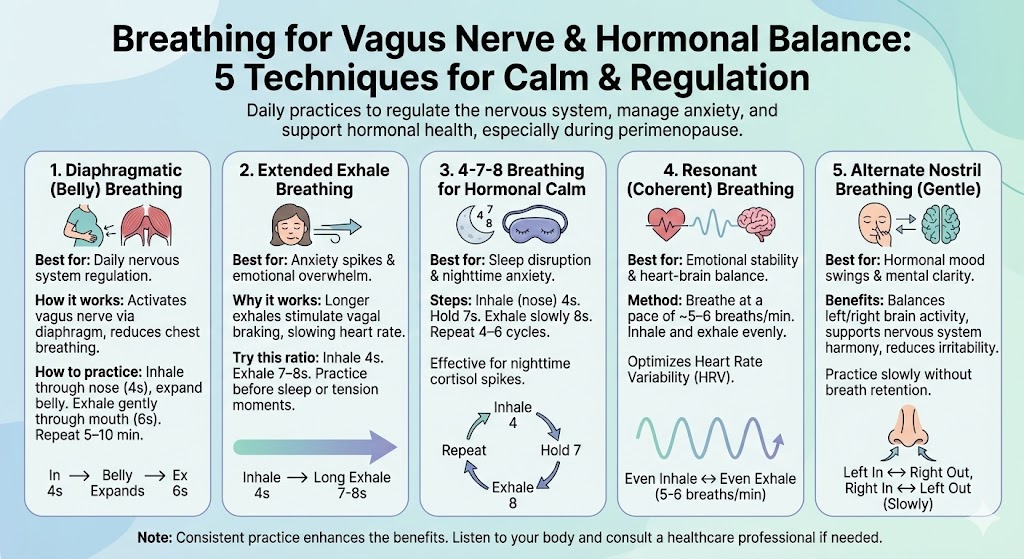
1. Diaphragmatic (Belly) Breathing
Best for: Daily nervous system regulation
How it works:
- Activates the vagus nerve via the diaphragm
- Reduces shallow chest breathing linked to anxiety
How to practice:
- Inhale slowly through the nose for 4 seconds
- Expand the belly, not the chest
- Exhale gently through the mouth for 6 seconds
- Repeat for 5–10 minutes
2. Extended Exhale Breathing
Best for: Anxiety spikes and emotional overwhelm
Why it works:
Longer exhales stimulate vagal braking, slowing heart rate and calming stress responses.
Try this ratio:
- Inhale: 4 seconds
- Exhale: 7–8 seconds
Practice before sleep or during moments of tension.
3. 4-7-8 Breathing for Hormonal Calm
Best for: Sleep disruption and nighttime anxiety
Steps:
- Inhale through the nose for 4
- Hold for 7
- Exhale slowly for 8
- Repeat 4–6 cycles
This technique is especially effective during perimenopause when cortisol tends to spike at night.

4. Resonant (Coherent) Breathing
Best for: Emotional stability and heart-brain balance
Method:
- Breathe at a pace of ~5–6 breaths per minute
- Inhale and exhale evenly
This breathing style optimizes heart rate variability (HRV), a direct marker of vagus nerve health.
5. Alternate Nostril Breathing (Gentle Version)
Best for: Hormonal mood swings and mental clarity
Benefits:
- Balances left and right brain activity
- Supports nervous system harmony
- Reduces irritability common in perimenopause
Practice slowly and without breath retention.
When to Practice Breathwork for Maximum Benefit
Consistency matters more than duration. Ideal times include:
- Morning (to stabilize cortisol rhythm)
- Mid-afternoon (to prevent energy crashes)
- Evening (to promote melatonin release)
- During hot flashes or heart palpitations
- Before bed to improve sleep onset

Even 3–5 minutes per session can create noticeable improvements.
Signs Your Vagus Nerve Is Responding Positively
With regular breathwork, many women report:
- Fewer anxiety episodes
- Improved digestion
- Better emotional resilience
- Reduced sleep latency
- Decreased intensity of hot flashes
- Greater sense of calm during hormonal shifts
These are clear markers of improved vagal tone.
Breathwork vs Supplements for Perimenopause
While magnesium, adaptogens, and herbal supports can help, breathwork offers advantages:
- Immediate effect
- No side effects
- Free and accessible
- Improves mind-body awareness
- Enhances effectiveness of other therapies

Used together, breathwork amplifies the benefits of lifestyle and nutritional interventions.
Final Thoughts: Breath as a Hormonal Reset Tool
Perimenopause is not a nervous system failure—it is a retraining opportunity. Breathwork gives women direct control over their internal state during a time of profound biological change.
By calming the vagus nerve, breathwork restores the body’s natural rhythm—supporting emotional balance, restorative sleep, and resilience throughout the perimenopausal transition.
Your breath is not just air—it is information. And the nervous system listens.
Citations:
Laborde et al., Effects of voluntary slow breathing on heart rate and… (systematic review / meta-analysis) — PubMed
Gerritsen & Band, Breath of Life: The Respiratory Vagal Stimulation Model — full text on PubMed Central (PMC)
North American Menopause Society (NAMS) — Perimenopause patient guidance

Medical Disclaimer: The information on My Vitality Protocol is intended for educational purposes and is not a substitute for professional medical advice, diagnosis, or treatment. Always seek the advice of your physician before starting any new health protocol. View our full disclaimer.
Transparency Notice: This post may contain affiliate links, and we may earn a commission if you make a purchase—at no extra cost to you. We also display ads to support our site. Everything we recommend is based on our own research and vitality protocol standards. Visit our Affiliate & Advertising Disclosure page for details.