

How a Simple Daily Ritual Restores Energy, Motivation, and Emotional Resilience After 50
Midlife fatigue is not just “being tired.” For many women over 50, it feels deeper—persistent low energy, mental fog, emotional heaviness, and a sense that rest no longer restores vitality the way it once did.
While hormones, sleep changes, and stress all play a role, research now points to an often-overlooked factor: how the brain processes stress, meaning, and emotional load. This is where a structured gratitude practice becomes a powerful—yet underestimated—tool for restoring energy in midlife.
Gratitude is not about forced positivity. When practiced correctly, it acts as a neurological reset, shifting the nervous system out of depletion and back toward balance.
Why Midlife Fatigue Feels Different After 50
Fatigue during midlife is multifactorial. Common contributors include:
- Fluctuating estrogen and cortisol rhythms
- Reduced stress resilience
- Poor sleep efficiency
- Chronic low-grade inflammation
- Emotional labor accumulated over decades

What makes midlife exhaustion unique is that it often involves mental and emotional fatigue, not just physical tiredness. This is why naps, caffeine, and supplements may offer only temporary relief.
Gratitude works upstream—at the level of the brain and nervous system.
The Science Behind Gratitude and Energy
A consistent gratitude practice has been shown to influence:
- Dopamine and serotonin signaling (motivation and mood)
- Parasympathetic nervous system activation (rest and recovery)
- Cortisol regulation (stress hormone balance)
- Sleep quality and emotional regulation

Studies referenced by institutions such as Harvard Health Publishing show that gratitude practices are associated with improved emotional well-being, lower stress perception, and better sleep—all directly tied to energy levels in women over 50.
In short: gratitude conserves energy by reducing internal resistance and emotional strain.
Gratitude vs. Positive Thinking: Why It Works Better
Positive thinking often fails in midlife because it asks women to override reality.
Gratitude is different.

Instead of denying challenges, it acknowledges reality while shifting attention to what is stable, supportive, or meaningful. This subtle cognitive shift lowers nervous system threat signals—freeing up energy that would otherwise be spent on vigilance, worry, or rumination.
How Gratitude Directly Combats Midlife Fatigue
Gratitude helps restore vitality by:
- Reducing mental overload
- Improving sleep onset and depth
- Enhancing emotional regulation
- Lowering inflammation linked to chronic stress
- Improving motivation without stimulants

For women 50+, this translates to more usable energy, not just fewer symptoms.
The Most Effective Gratitude Practice for Women 50+
The 5-Minute Evidence-Based Gratitude Ritual
This method is simple, sustainable, and neurologically effective.
When: Evening or early morning
Duration: 3–5 minutes
Frequency: Daily or at least 5 days per week
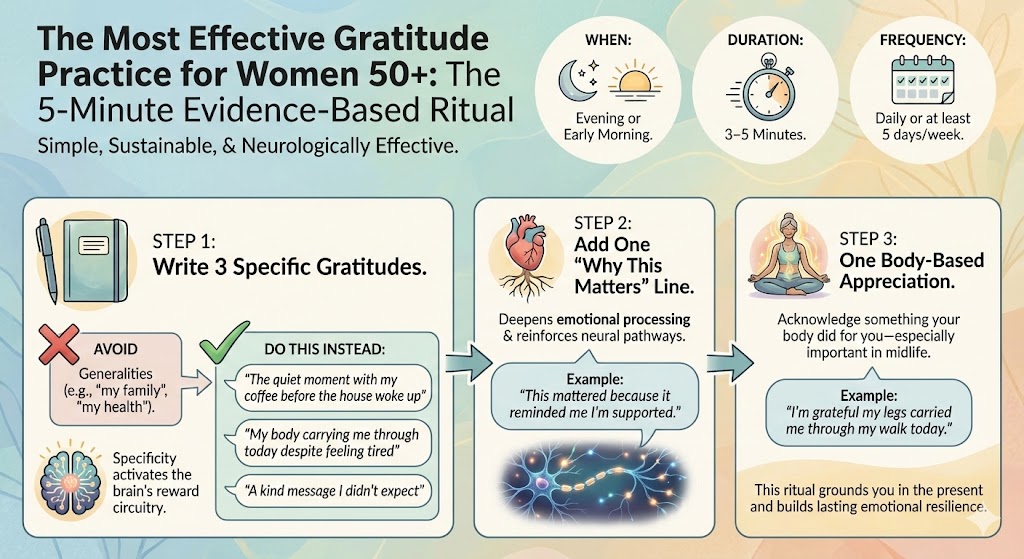
Step 1: Write 3 Specific Gratitudes
Avoid generalities like “my family” or “my health.”
Instead:
- “The quiet moment with my coffee before the house woke up”
- “My body carrying me through today despite feeling tired”
- “A kind message I didn’t expect”
Specificity is what activates the brain’s reward circuitry.
Step 2: Add One “Why This Matters” Line
This deepens emotional processing and reinforces neural pathways.
Example:
“This mattered because it reminded me I’m supported.”
Step 3: One Body-Based Appreciation
Acknowledge something your body did for you—especially important in midlife.
Example:
“I’m grateful my legs carried me through my walk today.”
Morning vs Evening Gratitude: Which Is Better for Fatigue?
Both are effective, but they serve different purposes:
- Morning gratitude → Improves motivation and emotional tone for the day
- Evening gratitude → Improves sleep quality and overnight recovery

For midlife fatigue, evening practice tends to deliver faster results, especially when paired with reduced screen exposure.
Common Mistakes That Make Gratitude Ineffective
Many women try gratitude and conclude “it doesn’t work.” Usually, the issue is one of these:
- Treating it like a checklist
- Being overly generic
- Using it to suppress negative emotions
- Practicing inconsistently

Gratitude is most effective when it feels grounded, specific, and emotionally honest.
How Long Before You Feel More Energy?
Most women notice subtle changes within 7–14 days, including:
- Improved sleep quality
- Less morning heaviness
- Better emotional steadiness
- Reduced mental fatigue

Over 4–6 weeks, many report sustained energy improvements, even without changing diet or supplements.
Gratitude as a Daily Vitality Protocol
Midlife fatigue is not a personal failure—it’s a biological and emotional signal.
A gratitude practice works because it reduces the hidden energy drains most women don’t realize they’re carrying: chronic stress, emotional vigilance, and nervous system overload.
Practiced consistently, gratitude becomes more than a mindset—it becomes a daily vitality protocol, restoring energy from the inside out.
Citations:
Dickens, L. R. (2017). Using gratitude to promote positive change: A series of meta-analyses investigating the effectiveness of gratitude interventions. Basic and Applied Social Psychology, 39(4), 193–208.
Harvard Health Publishing. (2021). Giving thanks can make you happier. Harvard Medical School.
UCLA Health. (2023). The health benefits of gratitude.

Medical Disclaimer: The information on My Vitality Protocol is intended for educational purposes and is not a substitute for professional medical advice, diagnosis, or treatment. Always seek the advice of your physician before starting any new health protocol. View our full disclaimer.
Transparency Notice: This post may contain affiliate links, and we may earn a commission if you make a purchase—at no extra cost to you. We also display ads to support our site. Everything we recommend is based on our own research and vitality protocol standards. Visit our Affiliate & Advertising Disclosure page for details.