

Why When You See the Sun Matters More Than Supplements for Restorative Sleep After 50
If falling asleep feels harder, staying asleep feels fragile, or you wake up tired despite enough hours in bed, the issue may not be magnesium, melatonin, or stress alone.
For many women over 50, poor sleep is a circadian rhythm problem, not a sleep hygiene problem—and the most powerful reset button is morning sunlight timing.
Light is the primary signal that sets your internal clock. When you get it wrong—or miss it entirely—sleep hormones fall out of sync. When you get it right, deep sleep becomes easier, more natural, and more consistent.
What the Circadian Rhythm Really Is (and Why It Changes After 50)
Your circadian rhythm is your body’s 24-hour timing system. It regulates:
- Sleep and wake cycles
- Cortisol (morning energy)
- Melatonin (nighttime sleep hormone)
- Body temperature
- Digestion and metabolism

After 50, this system becomes more sensitive and less forgiving due to:
- Hormonal changes affecting melatonin production
- Reduced light exposure from indoor lifestyles
- Slower circadian phase shifting
The result?
Later sleep onset, lighter sleep, early awakenings, and daytime fatigue.
Why Morning Sunlight Is the Most Powerful Circadian Reset
Morning light works because it directly communicates with the brain’s master clock—the suprachiasmatic nucleus (SCN)—through specialized light-sensitive cells in the eyes.

Early daylight exposure:
- Signals “day has begun” to the brain
- Triggers healthy cortisol rise in the morning
- Suppresses melatonin at the right time
- Sets a countdown timer for melatonin release at night
This is why sleep quality at night depends on light exposure in the morning, not just darkness at bedtime.
The Ideal Morning Sunlight Timing for Deep Sleep
For most women 50+, the optimal window is:
Within 30–60 minutes of waking
For 5–20 minutes, depending on brightness

Key guidelines:
- Earlier is better than later
- Outdoor light is far more effective than indoor light
- Even cloudy daylight works better than artificial lighting
This timing helps anchor your circadian rhythm so melatonin is released earlier and more predictably at night.
How Morning Sunlight Improves Deep Sleep Specifically
Consistent morning light exposure:
- Advances sleep onset (you feel sleepy earlier)
- Increases time spent in deep sleep stages
- Reduces nighttime awakenings
- Improves sleep efficiency
- Stabilizes energy and mood the next day

For women in midlife, this often translates into fewer 2–4 a.m. wakeups, a common circadian disruption during menopause and beyond.
How to Practice Morning Sunlight Correctly
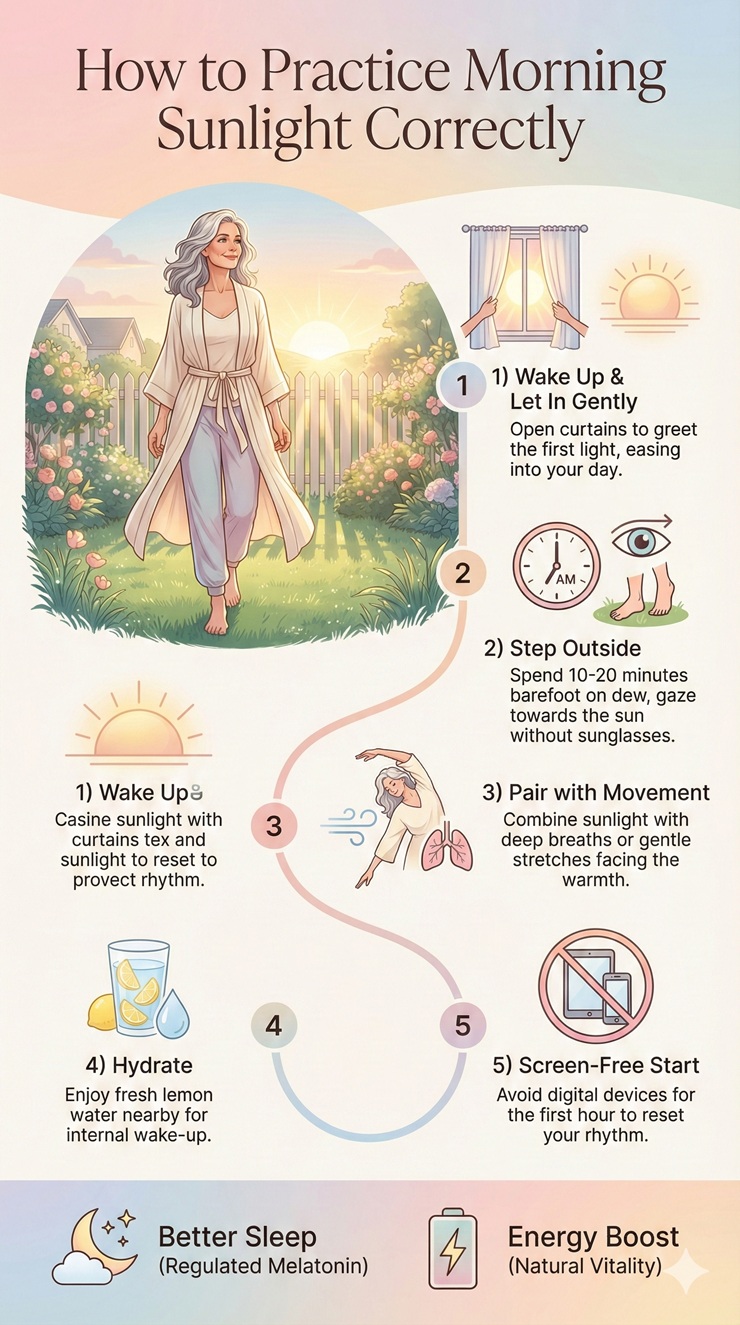
1. Go Outside (Not Through a Window)
Glass blocks key wavelengths needed to signal the circadian clock.
- Step outside on a porch, balcony, or sidewalk
- Face the general direction of the sky (no sun-gazing)
2. Skip Sunglasses (Briefly)
Sunglasses reduce circadian input.
- Natural light to the eyes is necessary
- No staring directly at the sun
3. Pair Light With Gentle Movement
Walking enhances the signal.
- 5–10 minute slow walk
- Stretching or light mobility also works
What If You Wake Up Before Sunrise?
If it’s still dark:
- Turn on indoor lights immediately upon waking
- Go outside as soon as the sun rises
- Avoid delaying light exposure until mid-morning
Consistency matters more than perfection.
Common Mistakes That Weaken the Effect
Many women unintentionally cancel out morning light benefits by:
- Sleeping in on weekends
- Wearing sunglasses immediately
- Staying indoors until late morning
- Using bright screens late at night
Circadian rhythms thrive on regular timing, not intensity alone.
How Long Before Sleep Improves?
Most women notice changes within:
- 3–5 days: easier sleep onset
- 1–2 weeks: deeper, more stable sleep
- 3–4 weeks: fully shifted circadian rhythm
This works even without changing supplements or bedtime routines.
Morning Sunlight vs Melatonin Supplements
Melatonin supplements can help short-term, but they don’t fix circadian misalignment.
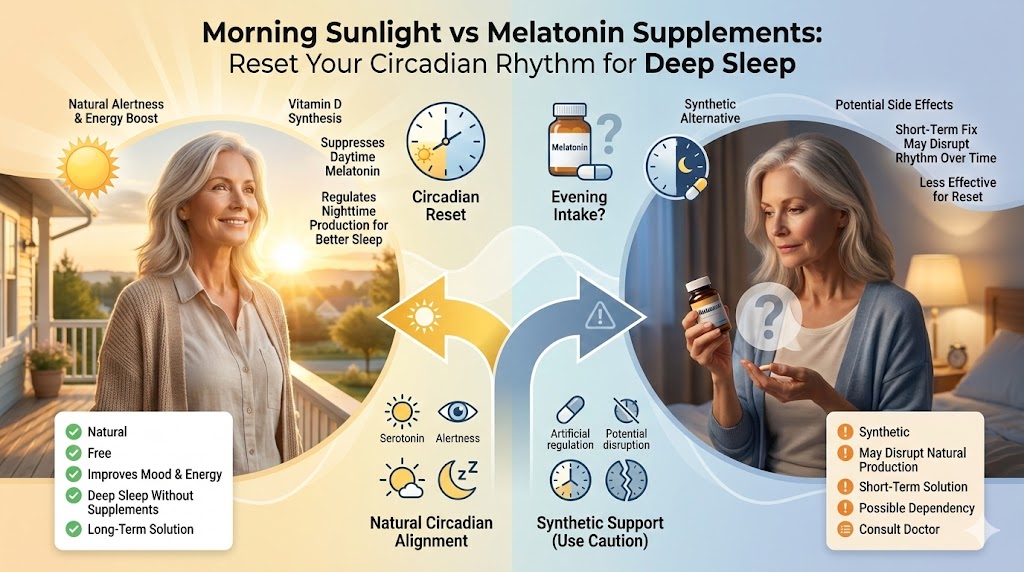
Morning sunlight:
- Restores natural melatonin timing
- Improves sleep architecture
- Supports long-term rhythm stability
Light is the master regulator; supplements are secondary.
Final Thoughts: Sleep Begins With the Sun, Not the Pillow
After 50, deep sleep is less about forcing relaxation at night—and more about sending the right signal to your brain in the morning.
Morning sunlight isn’t a wellness trend.
It’s biology.
When you align your circadian rhythm with natural light, sleep becomes something your body does naturally again—without struggle, supplements, or stress.
Citations
- National Institutes of Health – Circadian Rhythms Fact Sheet
- Harvard Health Publishing – Blue light, melatonin, and sleep
- Sleep Foundation – Light exposure and circadian rhythm

Medical Disclaimer: The information on My Vitality Protocol is intended for educational purposes and is not a substitute for professional medical advice, diagnosis, or treatment. Always seek the advice of your physician before starting any new health protocol. View our full disclaimer.
Transparency Notice: This post may contain affiliate links, and we may earn a commission if you make a purchase—at no extra cost to you. We also display ads to support our site. Everything we recommend is based on our own research and vitality protocol standards. Visit our Affiliate & Advertising Disclosure page for details.