

A Simple Daily Ritual to Restore Energy, Sleep, and Hormonal Rhythm
If you’ve noticed that your energy feels unpredictable, your sleep is lighter, or your mood seems more fragile after 50, you’re not imagining it. Hormonal shifts during perimenopause and menopause disrupt the body’s internal clock — and when that clock is off, everything from cortisol to melatonin to insulin can fall out of sync.
The good news? One of the most powerful hormone-supporting tools is free, natural, and available every morning.
☀️ Morning sunlight.
Just a few minutes of early daylight exposure can help recalibrate your hormonal rhythm, improve sleep quality, stabilize energy levels, and support overall vitality after 50.
Let’s explore how it works — and how to use it safely and effectively.
The 50+ Morning Vitality Protocol
- Hydrate: 8oz mineral water immediately upon waking.
- Light: 10 minutes outdoors (no sunglasses) before 9:00 AM.
- Move: Gentle stretching or walking while viewing the light.
- Consistency: Aim for 6 days a week for hormonal entrainment.
Key Takeaways
- Morning sunlight is a powerful hormonal signal, helping regulate cortisol, melatonin, insulin, and mood-related neurotransmitters after age 50.
- Just 5–15 minutes of early daylight exposure can help reset your circadian rhythm, improving sleep quality and daytime energy.
- Consistent morning light supports calmer stress responses, reducing afternoon crashes and nighttime restlessness common post-menopause.
- Sunlight naturally boosts serotonin, which supports emotional balance and helps the body produce melatonin later in the evening.
- Early daylight exposure may improve insulin sensitivity, supporting steadier energy levels and healthier weight regulation.
- Outdoor morning light is more effective than supplements or indoor lighting for syncing hormones and sleep-wake cycles.
- Gentle movement during sunlight exposure enhances circulation and amplifies hormonal benefits.
- Small, daily habits matter more than intensity—consistency is the key to lasting results.
Why Hormone Balance Becomes Harder After 50
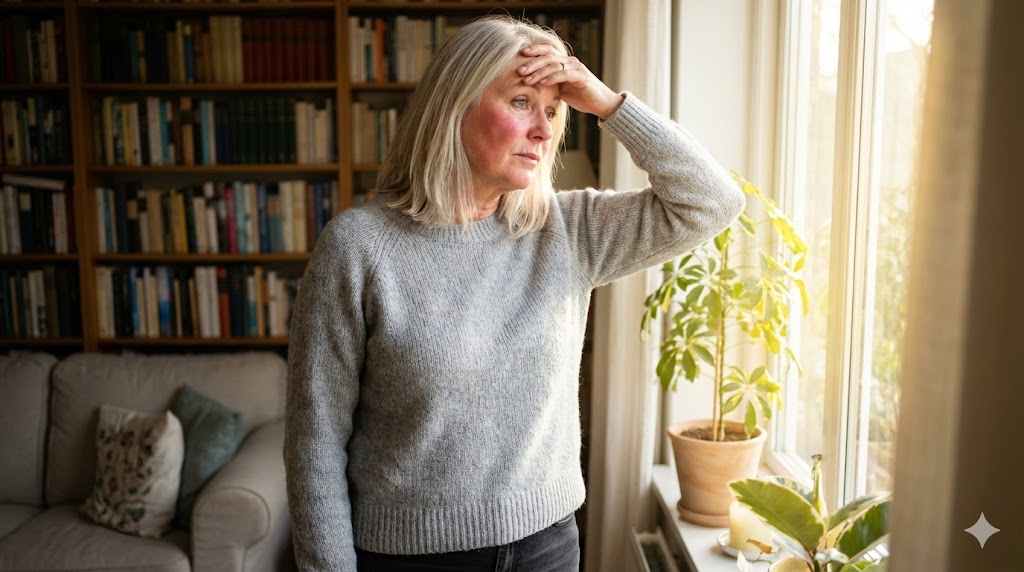
As estrogen and progesterone fluctuate and decline, several systems become more sensitive:
- Cortisol (your stress hormone) may spike at the wrong times
- Melatonin (your sleep hormone) may drop or release too late
- Insulin sensitivity can decline
- Serotonin and dopamine, which affect mood and motivation, may become inconsistent
What many women don’t realize is that light exposure — not just hormones — controls these systems.
Your brain uses light signals to decide when to release hormones. Without clear signals, hormonal confusion follows.
How Morning Sunlight Helps Regulate Hormones

1. Resets Your Circadian Rhythm
Your circadian rhythm is your body’s 24-hour hormonal schedule. Morning sunlight acts as a master reset button, signaling your brain that the day has begun.
This helps:
- Cortisol rise naturally in the morning (instead of spiking at night)
- Melatonin release on time in the evening
- Improve sleep depth and consistency
Better sleep alone can dramatically improve hormonal balance after 50.
2. Supports Healthy Cortisol Patterns
After menopause, cortisol can become erratic — leading to:
- Morning fatigue
- Afternoon crashes
- Nighttime alertness
Morning sunlight trains cortisol to peak earlier in the day, which:
- Improves morning energy
- Reduces evening stress hormones
- Makes it easier to wind down at night
This creates a more youthful stress-response pattern.
3. Boosts Serotonin and Mood Stability
Sunlight triggers serotonin production — a neurotransmitter linked to:
- Calm focus
- Emotional resilience
- Reduced anxiety
- Fewer mood swings
Higher daytime serotonin also leads to better melatonin production at night, improving sleep quality without supplements.
4. Improves Insulin Sensitivity
Research shows that early daylight exposure helps regulate blood sugar rhythms. This is especially important post-50, when insulin resistance becomes more common.
Benefits may include:
- Fewer energy crashes
- Reduced sugar cravings
- Better weight regulation
5. Morning Light and Menopause Belly Fat
Many women over 50 struggle with stubborn abdominal weight, often driven by elevated cortisol levels. Morning sunlight plays a critical role here by signaling the body to spike cortisol early in the day (when you need energy) rather than in the evening (where it signals fat storage).
By front-loading your cortisol production, you help break the cycle of stress-induced visceral fat accumulation common during menopause.
6. Supports Vitamin D Production (Naturally)
While midday sun is strongest for vitamin D, consistent morning exposure still contributes — especially when combined with short outdoor activity.
Vitamin D plays a role in:
- Hormone signaling
- Bone health
- Immune balance
- Mood regulation
How to Use Morning Sunlight Correctly (Post-50 Friendly)
You don’t need to sunbathe or stare at the sun. Small, consistent exposure works best.

The Ideal Routine:
- Time: Within 30–60 minutes of waking
- Duration: 5–15 minutes (longer on cloudy days)
- Location: Outdoors is best — balcony, yard, porch, or sidewalk
- Eyes: No sunglasses (regular eyeglasses are fine)
- Skin: No need to expose large areas; face and arms are enough
Even indirect sunlight counts — especially in the morning.
What About Cloudy Days or Winter?
Cloudy Days: You still get sufficient lux (light intensity) through clouds, but you may need to extend your time outside to 20–30 minutes.
Windows: Glass blocks the specific UV spectrum needed to fully reset circadian clocks. Open the window if possible.
Light Therapy Lamps: If you cannot get outside (due to mobility or weather), a 10,000 lux light therapy lamp used for 20 minutes at breakfast is a viable alternative, though it lacks the full infrared spectrum of natural sun.
Combine Sunlight with Gentle Movement for Better Results
Pairing sunlight with light activity amplifies hormonal benefits:
- Walking
- Gentle stretching
- Gardening
- Standing while breathing deeply
This combination improves circulation, lymphatic flow, and metabolic signaling.
Common Myths About Sunlight and Aging
Myth: Sunlight always damages skin
✔️ Truth: Short, early-day exposure is far gentler than midday sun
Myth: You need intense sun for benefits
✔️ Truth: Consistency matters more than intensity
Myth: Supplements can replace sunlight
✔️ Truth: Supplements don’t reset circadian hormones
When You Might Notice Benefits
Many women report:
- Better sleep within 3–5 days
- Improved morning energy within 1–2 weeks
- More stable mood and focus within 2–3 weeks
Hormonal rhythm improves gradually — not overnight.
Daily Checklist Summary
- Wake up
- Drink a glass of water
- Step outside for 5–15 minutes
- Breathe deeply and relax your shoulders
- Avoid checking your phone during exposure
That’s it. No equipment. No cost. No strain.
Final Thoughts: Light Is Information
After 50, your body doesn’t need more stimulation — it needs clear signals.

Morning sunlight delivers one of the clearest hormonal messages your brain can receive:
It’s time to wake, regulate, and restore balance.
If you’re rebuilding energy, sleep, and vitality naturally, this simple daily ritual is one of the most powerful places to begin.
- Claim 1: Morning sunlight resets circadian rhythm and boosts morning cortisol. Bright light exposure in the morning advances cortisol rhythms and decreases levels on the rising phase, aiding energy regulation.
- Claim 2: It enhances serotonin indirectly via circadian alignment. Sunlight supports serotonin pathways through vitamin D and rhythm regulation, stabilizing mood in older adults.
- Claim 3: Suppresses melatonin for wakefulness. Morning light exposure helps suppress melatonin onset timing, promoting alertness without disrupting later secretion.
- Claim 4: Promotes vitamin D synthesis for hormonal health. Sunlight triggers vitamin D production, which parallels melatonin in modulating hormones and sleep quality.

Medical Disclaimer: The information on My Vitality Protocol is intended for educational purposes and is not a substitute for professional medical advice, diagnosis, or treatment. Always seek the advice of your physician before starting any new health protocol. View our full disclaimer.
Transparency Notice: This post may contain affiliate links, and we may earn a commission if you make a purchase—at no extra cost to you. We also display ads to support our site. Everything we recommend is based on our own research and vitality protocol standards. Visit our Affiliate & Advertising Disclosure page for details.